| Voir le sujet précédent :: Voir le sujet suivant |
| Auteur |
Message |
Katastrofo 

Inscrit le: 26 Fév 2007
Messages: 10405
Localisation: USA
Expire: 2013-11-19
|
 Posté: Mer Nov 17, 2010 3:35 pm Sujet du message: High dilution 1+100 |
|
Posté: Mer Nov 17, 2010 3:35 pm Sujet du message: High dilution 1+100 |
|
|
Katastrofo wrote:
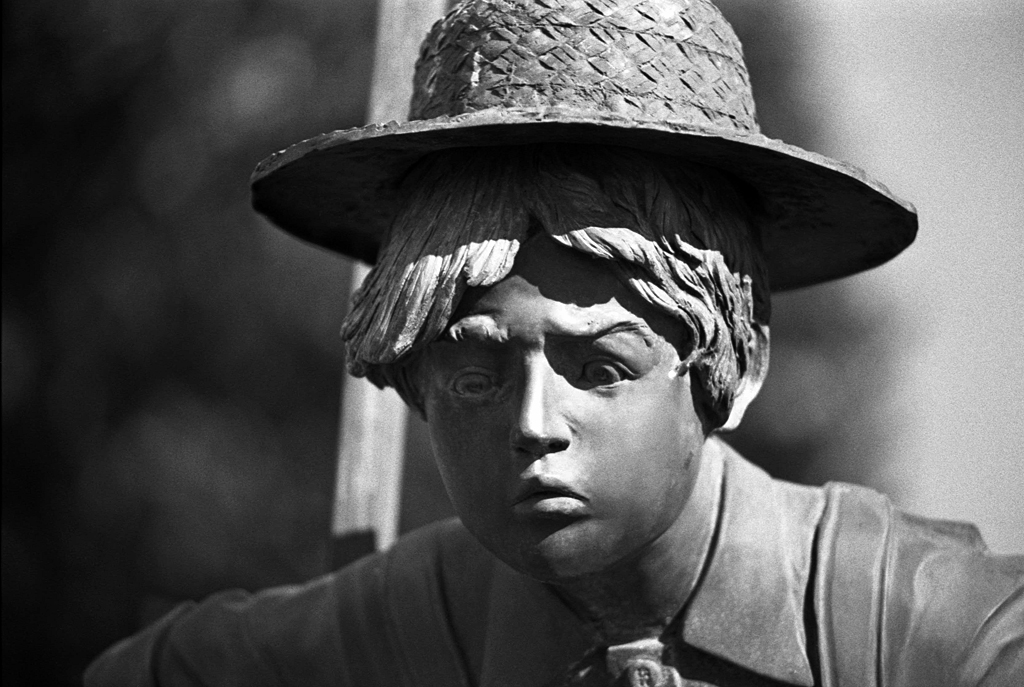
Using HC-110, 1+100 which is only 3ml to 300 ml water. Constant agitation
for first minute then one inversion every 3 minutes. Dev time was 28 minutes.
Not bad, but maybe better results if I'd used more developer and
shorter times. Arista Premium 400, Canon A-1 with Series I 70-210 zoom:


I kept the temp at 20C, curious to hear what you think. The developer was my last small 120ml bottle that I purchased a year ago, but there
were no red strings of oxidation in it, looked as new. |
|
| Haut de page |
|
 |
ludoo


Inscrit le: 18 Sep 2009
Messages: 1397
Localisation: Milan, Italy
Expire: 2011-12-05
|
Posté: Mer Nov 17, 2010 3:49 pm Sujet du message: |
|
Posté: Mer Nov 17, 2010 3:49 pm Sujet du message: |
|
|
ludoo wrote:
Lots of grain, or is this an effect of scanning it? Detail in the shadows seem to be there, but the highlights seem a bit burned out.
I have nothing to compare it to as I never shot the same film, but as hc-110 is my main (currently only) developer I'm interested in this.
_________________
My galleries
Digital: Samsung EX-1
Past Digital: Samsung NX10, Sigma SD9, Sigma SD10, SD14, DP2, Pentax *istD, Kx, Fuji S2 Pro, Canon 5D
Analog: packfilm Polaroids, 6x9 Kodak folders, Pentacon Taxona half-frame, Fujica ST605n, Walz Envoy, Olympus 35 S-II, Olympus Wide S
Past Analog: Polaroid 600se, Polaroid 110B, Canon IIF, various fixed-lens and Russian rangefinders, ...
Past Lenses: Nikkor 24/2.8, Nikkor SC 50/1.4, Nikkor 50/2, Nikkor H 85/1.8, Nikkor P 105/2.5, Nikkor Q 135/3.5, Fujinon 100/2.8, Fujinon EBC 100/2.8, Fujinon EBC 135/3.5, Fujinon EBC 200/4.5, Mamiya SX 135/2.8, CZJ Flektogon 35/2.4, CZJ Pancolar 50/1.8 zebra, CZJ Sonnar 135/3.5, ...
altroformato
|
|
| Haut de page |
|
|
LucisPictor

Inscrit le: 26 Fév 2007
Messages: 17633
Localisation: Oberhessen, Germany / Maidstone ('95-'96)
Expire: 2013-12-03
|
Posté: Mer Nov 17, 2010 4:02 pm Sujet du message: |
|
Posté: Mer Nov 17, 2010 4:02 pm Sujet du message: |
|
|
LucisPictor wrote:
I really need to set-up my darkroom in our guest bathroom again!
(But not tonight since there will be an international friendly : Germany vs. Sweden.)
_________________
Personal forum activity on pause every now and again (due to job obligations)!
Carsten, former Moderator 
Things ON SALE
Carsten = "KAPCTEH" = "Karusutenu" | T-shirt?.........................My photos from Emilia: http://www.schouler.net/emilia/emilia2011.html
My gear: http://retrocameracs.wordpress.com/ausrustung/
Old list: http://forum.mflenses.com/viewtopic.php?t=65 (Not up-to-date, sorry!) | http://www.lucispictor.de | http://www.alensaweek.wordpress.com |
http://www.retrocamera.de |
|
| Haut de page |
|
|
F16SUNSHINE

Inscrit le: 20 Août 2007
Messages: 5486
Localisation: Left Coast
Expire: 2011-11-18
|
Posté: Mer Nov 17, 2010 4:25 pm Sujet du message: |
|
Posté: Mer Nov 17, 2010 4:25 pm Sujet du message: |
|
|
F16SUNSHINE wrote:
My first impression is they look very good.
One thing to try would be fewer inversions and longer time
The highlights take less time to develop and use up the developer more quickly than shadow details.
Experiment and see. Another thing I find is to "hold back" faster films when using diluted or spent developer.
For example I like to shoot tmax400 as 100 and then "stand" develop in old or paper developer. Looks great for portraits.
It's not really stand as I give some inverts but not Many.
_________________
Moderator |
|
| Haut de page |
|
|
Katastrofo
Inscrit le: 26 Fév 2007
Messages: 10405
Localisation: USA
Expire: 2013-11-19
|
Posté: Mer Nov 17, 2010 4:33 pm Sujet du message: |
|
Posté: Mer Nov 17, 2010 4:33 pm Sujet du message: |
|
|
Katastrofo wrote:
Thanks for your comment, fellas!
Andy, I used Massive Dev chart for this, but the times they gave was
27-30 mins. If I had cut inversions down to 30sec initially and one inversion
say every 5 minutes, might have gotten better results, will see next time.
Thanks for the gouge on TMAX 400!  |
|
| Haut de page |
|
|
martinsmith99

Inscrit le: 31 Août 2008
Messages: 7029
Localisation: S Glos, UK
Expire: 2013-11-18
|
Posté: Mer Nov 17, 2010 5:10 pm Sujet du message: |
|
Posté: Mer Nov 17, 2010 5:10 pm Sujet du message: |
|
|
martinsmith99 wrote:
Tones and sharpness look fine to me, but I don't get that much grain from 1:50 Rodinal & HP5/Tri-X.
What did the negs look like and did you boost the contrast when scanning?
_________________
Casual attendance these days |
|
| Haut de page |
|
|
Orio

Inscrit le: 24 Fév 2007
Messages: 29545
Localisation: West Emilia
Expire: 2012-12-04
|
Posté: Mer Nov 17, 2010 5:25 pm Sujet du message: |
|
Posté: Mer Nov 17, 2010 5:25 pm Sujet du message: |
|
|
Orio wrote:
It would be interesting to see two rolls with the same subjects and (if possible) taken in the same moments, one developed normally, the other with the 1+100 technique. And see the differences.
_________________
Orio, Administrator
T*
NE CEDE MALIS AUDENTIOR ITO
Ferrania film is reborn! http://www.filmferrania.it/
Support the Ornano film chemicals company and help them survive!
http://forum.mflenses.com/ornano-chemical-products-t55525.html |
|
| Haut de page |
|
|
F16SUNSHINE
Inscrit le: 20 Août 2007
Messages: 5486
Localisation: Left Coast
Expire: 2011-11-18
|
Posté: Mer Nov 17, 2010 6:10 pm Sujet du message: |
|
Posté: Mer Nov 17, 2010 6:10 pm Sujet du message: |
|
|
F16SUNSHINE wrote:
After looking again I think these are great. The slightly burned highlight on the nose in the first one is unavoidable without burying shadow detail with our Epson scanners.
It's likely not the neg but the scanner.
A bit of highlight flter in LR or Aperture and this should tune up just fine.
If you wet printed printed these you could split up the exposure with a different contrast filters and VC paper for a very tonally full print.
The grain looks kick ass! I'm surprised there is so much with this weak developer.
You have me thinking Bill. Thanks!
_________________
Moderator |
|
| Haut de page |
|
|
Katastrofo
Inscrit le: 26 Fév 2007
Messages: 10405
Localisation: USA
Expire: 2013-11-19
|
Posté: Jeu Nov 18, 2010 12:01 am Sujet du message: |
|
Posté: Jeu Nov 18, 2010 12:01 am Sujet du message: |
|
|
Katastrofo wrote:
Martin, I scan negs with no boost to anything, and all settings are off. I did
apply a little contrast in PP. The negs look like the others I did with more
developer in less time, look normal, no fog, etc.
Orio, good idea, may be tough to execute successfully, but worth a try.
Andy, I like HC-110, a lot. That and my Thornton's is all I use. I think high
dilution might be more successful with 120 and larger. I only used a water
stop with this, the thinking was the development was pretty much shot at
28 mins anyway. Then of course used fixer/water bath/clearing.
I don't have LR or a Mac for Aperture, but am thinking about upgrading
my software.
Doing wet prints at home is something I hope to be doing by next spring.
And oh gosh a whole new learning curve!  |
|
| Haut de page |
|
|
marty
Inscrit le: 09 Avr 2009
Messages: 767
Localisation: Italy
|
Posté: Jeu Nov 18, 2010 12:45 am Sujet du message: |
|
Posté: Jeu Nov 18, 2010 12:45 am Sujet du message: |
|
|
marty wrote:
These look good to me. The point of using higher dilutions is to handle high contrast scenes (obtaining a compensating effect that is), since this is the case I'd consider the experiment successful. The grain looks not too much, nor in an objective way neither to my taste. If I remember well Arista 400 is basically Tri-X, so no wonder to me it exhibits a certain amount of grain. That said I think the grain can be evaluated properly only looking it on a print, looking at a scan has never been discriminant in this regard to me that is.
Cheers, M.
_________________
Canon FD
Bodies: AT-1, A-1, T-90
Lenses: nFD 20mm f2.8, 24 f2.8, 28 f2.8, 35 f2, FD 50 f1.8 S.C., 85 f1.8, 100 f2.8, 135 f2.8, 200 f4, 300 f4
|
|
| Haut de page |
|
|
Katastrofo
Inscrit le: 26 Fév 2007
Messages: 10405
Localisation: USA
Expire: 2013-11-19
|
Posté: Jeu Nov 18, 2010 2:34 pm Sujet du message: |
|
Posté: Jeu Nov 18, 2010 2:34 pm Sujet du message: |
|
|
Katastrofo wrote:
Marty, thanks for your thoughts, will do more experimenting. |
|
| Haut de page |
|
|
fish4570

Inscrit le: 06 Jan 2010
Messages: 4514
Localisation: At the confluence of the Locust Fork of the Warrior River and Black Creek, Alabama
Expire: 2012-03-21
|
Posté: Jeu Nov 18, 2010 9:58 pm Sujet du message: |
|
Posté: Jeu Nov 18, 2010 9:58 pm Sujet du message: |
|
|
fish4570 wrote:
They look good to me, Bill, but D76 at a normal time have done about the same, maybe with shadows a little more open. Of course, I have experience only with D76 and Tmax ... 
_________________
Paul
I chase Light
http://blackcreekjournal.blogspot.com/ |
|
| Haut de page |
|
|
Katastrofo
Inscrit le: 26 Fév 2007
Messages: 10405
Localisation: USA
Expire: 2013-11-19
|
Posté: Ven Nov 19, 2010 12:32 am Sujet du message: |
|
Posté: Ven Nov 19, 2010 12:32 am Sujet du message: |
|
|
Katastrofo wrote:
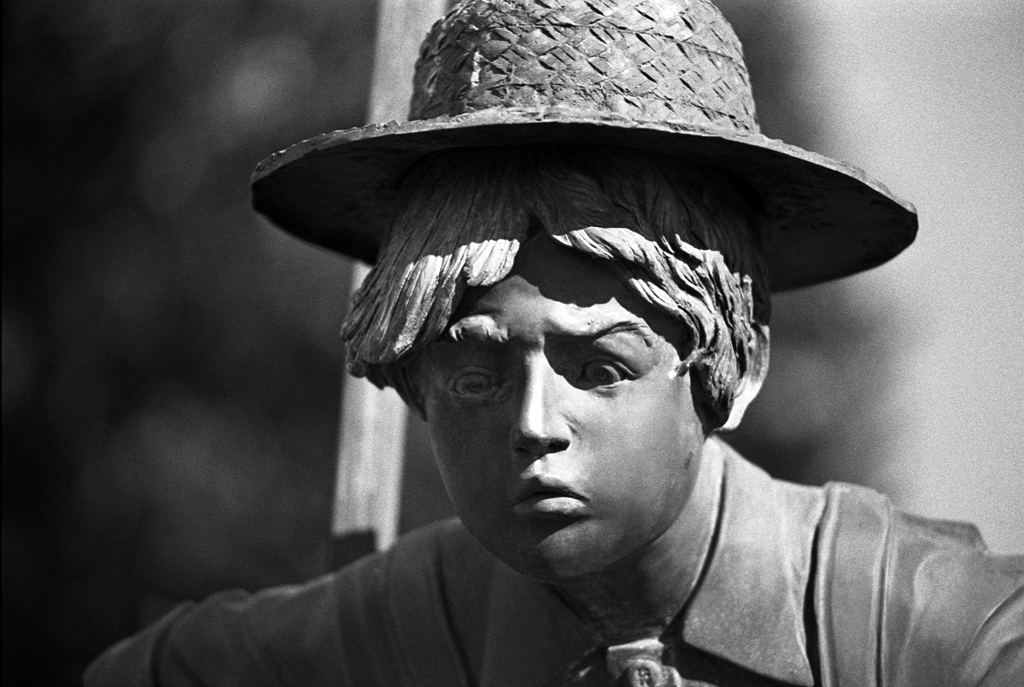
Thanks, Paul, I'm trying to arrive at the best way to develop Arista Premium
and my Thornton's isn't, but does well with medium format (and those that
use it for LF film). Another from the same roll, same result:
 |
|
| Haut de page |
|
|
|
|
|
Vous ne pouvez pas publier de nouveaux sujets dans ce forum
Vous ne pouvez pas répondre aux sujets de ce forum
Vous ne pouvez pas modifier vos messages dans ce forum
Vous ne pouvez pas supprimer vos messages dans ce forum
Vous ne pouvez pas voter dans les sondages de ce forum
|
 Français
 Español
 中文
 Magyar
 Русский
 Deutsch
 日本語