| Voir le sujet précédent :: Voir le sujet suivant |
| Auteur |
Message |
alex ph 

Inscrit le: 16 Mar 2013
Messages: 1802
|
 Posté: Ven Avr 24, 2020 1:37 pm Sujet du message: A curious Will Wetzlar Maginon 2.5/100 V |
|
Posté: Ven Avr 24, 2020 1:37 pm Sujet du message: A curious Will Wetzlar Maginon 2.5/100 V |
|
|
alex ph wrote:
I've got a pretty rare projector lens Maginon 2.5/100 V Will, Wetzlar - find no info about it in net. It has a metal barrel and a serial number. No idea which projector it was used with.
As I already mentioned, I am pretty curious of larger aperture projector lenses and have high expectations about them in beforehand. This one is an odd beast. First of all, it has no five or four elements, but just three, as a regular triplet. Or almost. Its elements are pretty bold, especially the one in the middle, and the front one is not flat from the bottom, but it's a kind of biconvex.

I've read somewhere that triplets cannot go faster than f2.8. So, how this one can?
Some of f2.8 projection triplets, like Angenieux or CZJ are pretty sharp and fetch perfectly well both close range and and infinity. I was really intrigued to discover what the f2.5 serve for. Well, I was surprised.
First of all, the lens just does not fetch infinity. To tell the truth, I don't understand how it is possible. I fixed it to a custom adapter I use for regular projection lenses. So the issue is not in my hands. But all I could get at best from it looks like that:

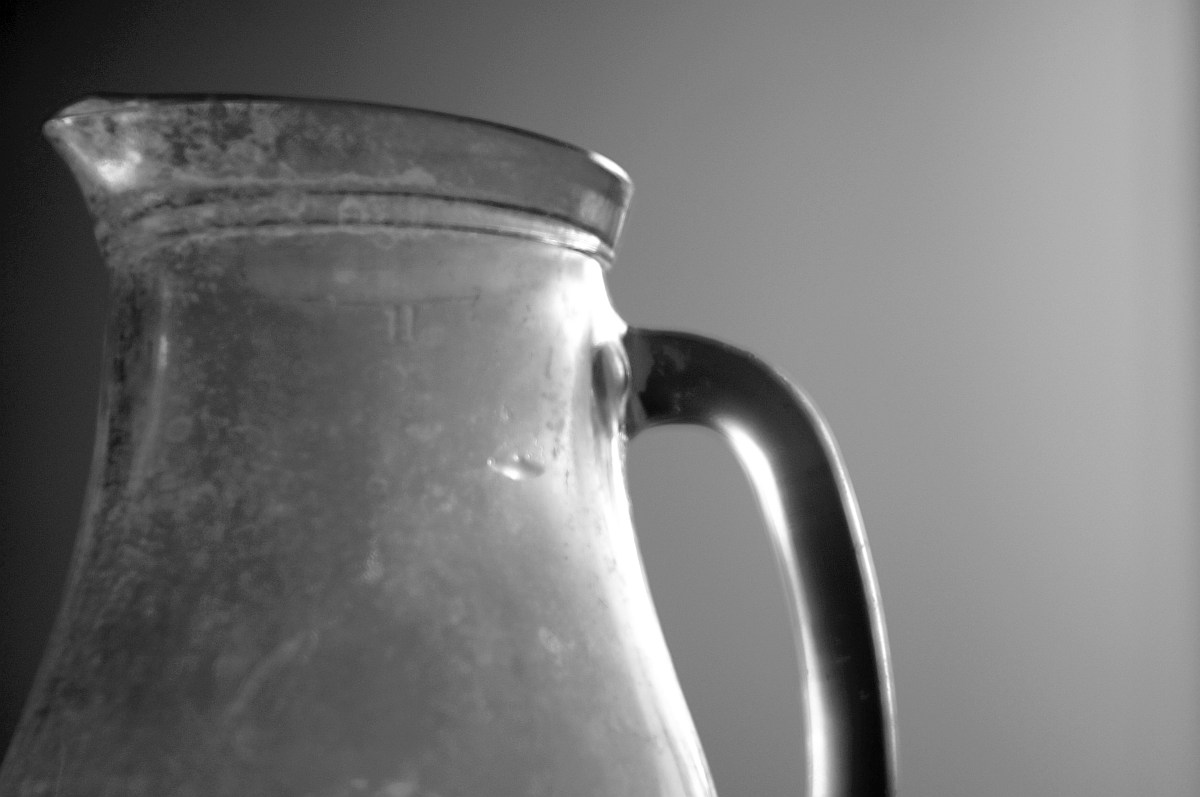
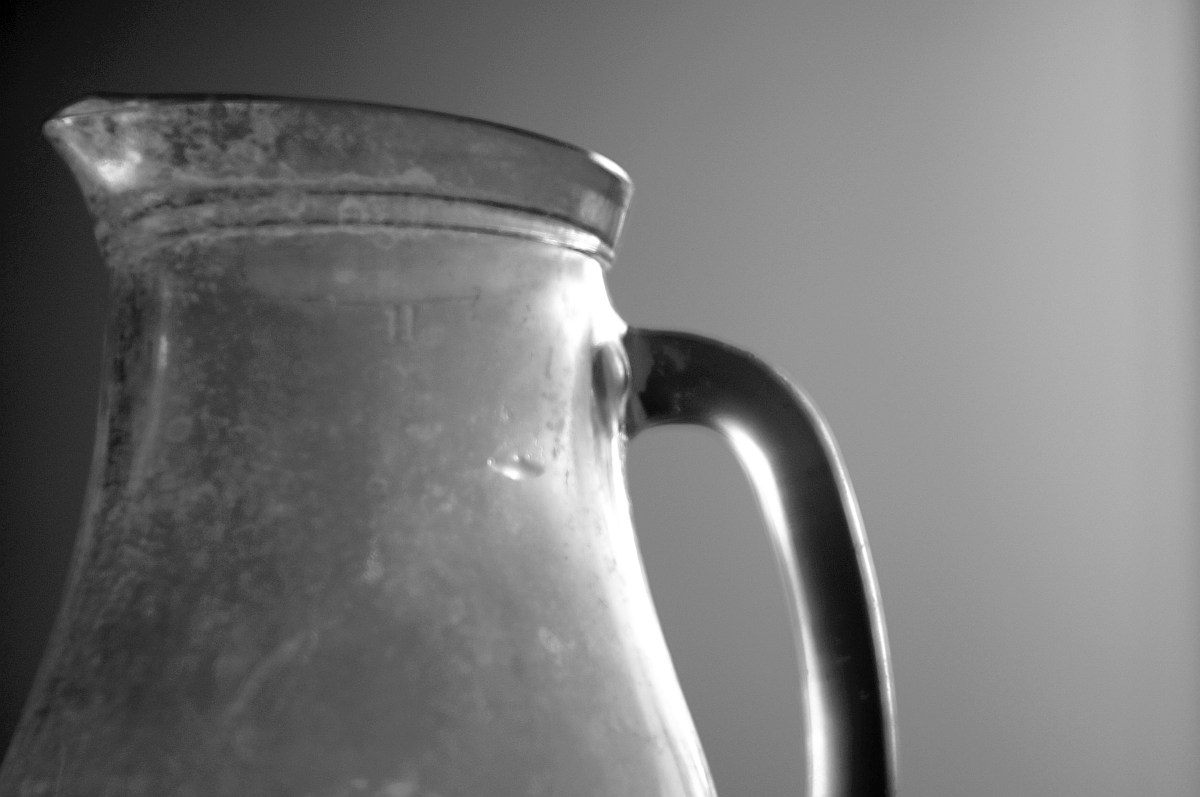
So you may say "crap!" But it is not. In close range it delivers pretty well, with a very pleasant mild glow that gifts it a character of an old brass lens.
#1
#2

#3
I haven't tried it yet with a slide projector, to test what the faster aperture and this close-field only capability may serve for.
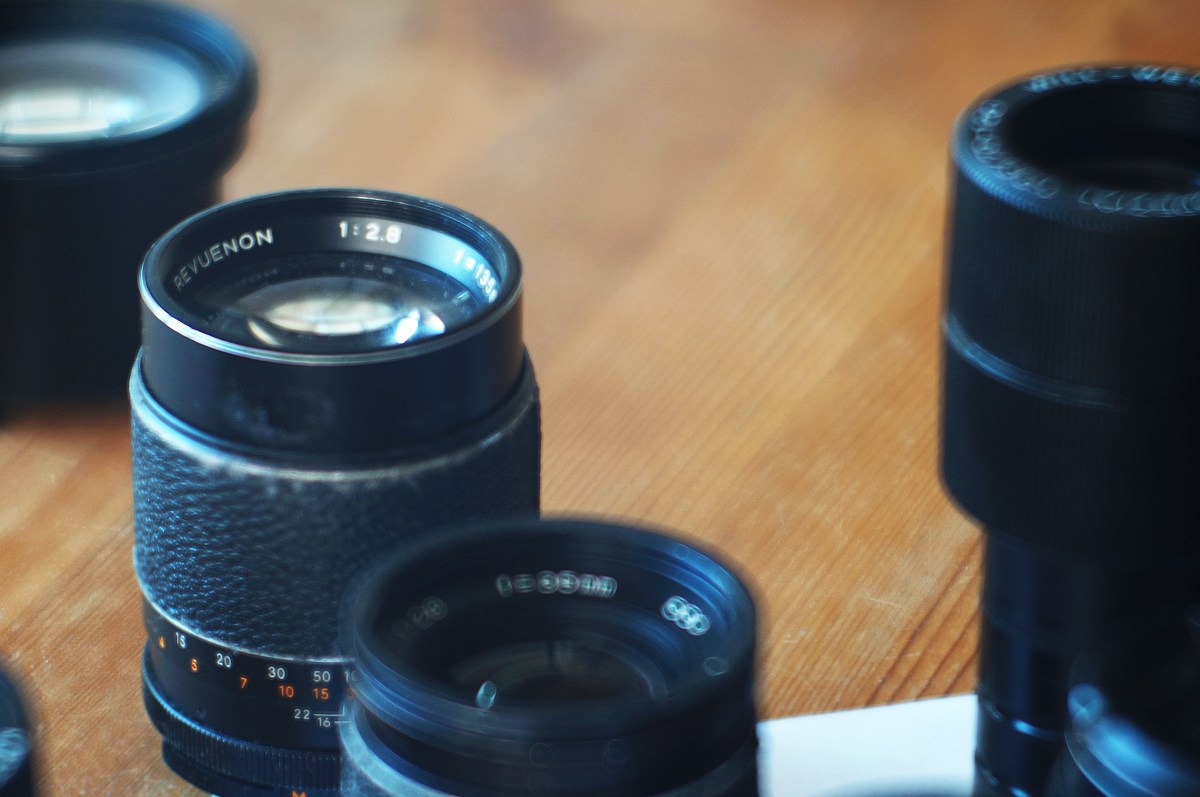
But what is remarkable, if you look at the last two shots, you'll see how radical the OOF transit is. At a distance of just two centimeters from the in-focus area you already see the typical Trioplan bubbles. For example, on the beauty rings of the slightly OOF lenses shot. Is not that unusual?
It looks really similar to the caracter of another (triplet?) lens of the same maker which was presented here in the forum years ago. I mean Rekagon 2.8/50.
What do you think about it? |
|
| Haut de page |
|
 |
paulhofseth
Inscrit le: 05 Mar 2011
Messages: 620
Localisation: Norway
Expire: 2018-06-28
|
Posté: Sam Avr 25, 2020 11:10 am Sujet du message: maginon |
|
Posté: Sam Avr 25, 2020 11:10 am Sujet du message: maginon |
|
|
paulhofseth wrote:
At least an 85mm2,8 Maginon with metal mount came with the Braun projectors back in the 1970ies.
p. |
|
| Haut de page |
|
|
alex ph
Inscrit le: 16 Mar 2013
Messages: 1802
|
Posté: Dim Avr 26, 2020 8:31 am Sujet du message: |
|
Posté: Dim Avr 26, 2020 8:31 am Sujet du message: |
|
|
alex ph wrote:
Thank you for your input. 2.8/85 Maginon lenses were pretty common in several projector marks, including the rebranded Kindermanns, Revues and Porsts. I think, as everywhere the metal-barrel ones were put to earlier models, and then the productors was seeking to cut production costs and passed to standard plastic barrels.
What is rather special in this one, it has f2.5 aperture. And a 5-digit serial number, as some of early CZJ, Angenieux and Berthiots, for example. |
|
| Haut de page |
|
|
alex ph
Inscrit le: 16 Mar 2013
Messages: 1802
|
Posté: Dim Avr 26, 2020 9:32 am Sujet du message: |
|
Posté: Dim Avr 26, 2020 9:32 am Sujet du message: |
|
|
alex ph wrote:
I decided to flip the second element, to test the lens again. It does not change its infinity rendering in a dramatic way. Although with a Sony FF it works generally better than with a Sony APS-C.
#1

#2
A BW conversion looks pretty cool, to my taste

#3
And here are some white, glowy objects, with contrast boosted
 |
|
| Haut de page |
|
|
kiddo
Inscrit le: 29 Juin 2018
Messages: 1630
|
Posté: Dim Avr 26, 2020 4:57 pm Sujet du message: |
|
Posté: Dim Avr 26, 2020 4:57 pm Sujet du message: |
|
|
kiddo wrote:
The 135 revuenon looks very bbar sp tamron style, isn't it? |
|
| Haut de page |
|
|
alex ph
Inscrit le: 16 Mar 2013
Messages: 1802
|
Posté: Mar Avr 28, 2020 10:34 pm Sujet du message: |
|
Posté: Mar Avr 28, 2020 10:34 pm Sujet du message: |
|
|
alex ph wrote:
That's an interesting comparison, kiddo. Never came to my mind. One of possible origins of this lens is rumored to be Tomioka. This notwithstanding, I think the design is pretty common for lenses coming from the 60s, meanwhile this one comes from the next decade.
Turning back to the topic starter, I mean the fast Maginon, I checked its capacity with a slide projector. And that surprised me once again. It's a very good projector lens, without any specific glow or fuzzyness when used in its predefinite function.
#1 Here is a slide sample projected with the Maginon 2.5/100 and taken with an aus Jena Prakticar 1.8/50 at f5.6

#2 This one is taken with the same Prakticar at around f2

#3 Once again with Prakticar at around f2, but this time the second element of Maginon if flipped, so you see fuzzy edges, but the center is sharp

So, this Maginon's behaviour as a taking glass, especially at infinity, remains highly mysterious for me. |
|
| Haut de page |
|
|
alex ph
Inscrit le: 16 Mar 2013
Messages: 1802
|
|
| Haut de page |
|
|
16:9

Inscrit le: 04 Avr 2014
Messages: 319
Localisation: UK
|
Posté: Mar Nov 07, 2023 10:05 am Sujet du message: |
|
Posté: Mar Nov 07, 2023 10:05 am Sujet du message: |
|
|
16:9 wrote:
You're an element missing . . .
_________________
If it ain't broke, break it. |
|
| Haut de page |
|
|
Ernst Dinkla
Inscrit le: 30 Nov 2016
Messages: 498
|
Posté: Mer Nov 08, 2023 3:25 pm Sujet du message: Re: maginon |
|
Posté: Mer Nov 08, 2023 3:25 pm Sujet du message: Re: maginon |
|
|
Ernst Dinkla wrote:
| paulhofseth a écrit: |
At least an 85mm2,8 Maginon with metal mount came with the Braun projectors back in the 1970ies.
p. |
I have the by Dieter Rams designed Braun D300 that I bought in the 1970's and it has the plastic version Maginon 85mm 2.8. Last week I made the projector usable again with a CLA which worked reasonably well but the lens had a kind of fungus I could not clean. With the elements removed I wondered whether the central negative one was possibly a bonded group in Elmaron/Hektor style but I doubt that, have not seen a line on the edge. I have a Leitz Elmaron 150mm 2.8 lens for a 6x6 projector which shows that even for that size the near triplet design can be quite fast. Solved the issue with the Maginon with another one that did not fit due to a wider head but chopped the head off to make it fit.
_________________
Met vriendelijke groet, Ernst
No photographer's gear list is complete without the printer mentioned ! |
|
| Haut de page |
|
|
alex ph
Inscrit le: 16 Mar 2013
Messages: 1802
|
Posté: Ven Jan 12, 2024 1:02 pm Sujet du message: |
|
Posté: Ven Jan 12, 2024 1:02 pm Sujet du message: |
|
|
alex ph wrote:
I doubt my lens has an element missing. The glass composition looks like a classic triplet, does not it? |
|
| Haut de page |
|
|
|
|
|
Vous ne pouvez pas publier de nouveaux sujets dans ce forum
Vous ne pouvez pas répondre aux sujets de ce forum
Vous ne pouvez pas modifier vos messages dans ce forum
Vous ne pouvez pas supprimer vos messages dans ce forum
Vous ne pouvez pas voter dans les sondages de ce forum
|
 Français
 Español
 中文
 Magyar
 Русский
 Deutsch
 日本語