| Voir le sujet précédent :: Voir le sujet suivant |
| Auteur |
Message |
LittleAlex 


Inscrit le: 27 Nov 2008
Messages: 2085
Localisation: L'vov (Western Ukraine)
|
 Posté: Mer Nov 22, 2023 12:32 am Sujet du message: CZY Sonnar 2.8/180 ? |
|
Posté: Mer Nov 22, 2023 12:32 am Sujet du message: CZY Sonnar 2.8/180 ? |
|
|
LittleAlex wrote:
One week ago I had been offered the lens, which I refused to bay for $250. Mainly because it was of “zebra†design, which I suspected shouldn’t be of the MC coating. The complete set looks exactly as on this photo – completely new, with the dedicated M42 adapter, and even with the native box:

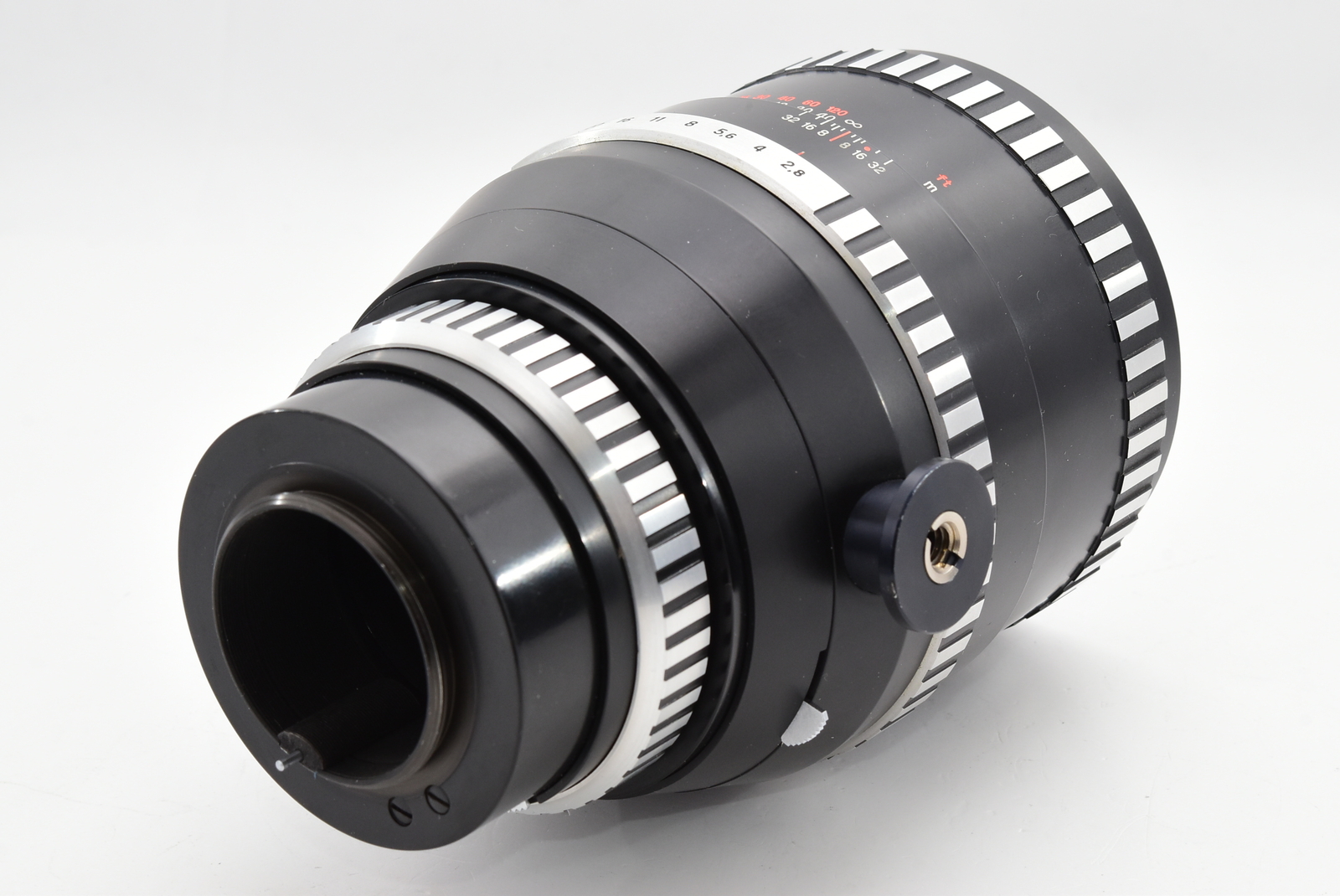
But today I had been suddenly approached by the seller, and literally pressed to take it for $160. Which I was not able to resist. Exploring it later at home I discovered that the coating is not so bad, however I am not certain that it might be the MC. Then I also discovered that it is marked differently then common Sonnars of that type would be – S 2.8 f=180 aus JENA. And same with the label on the box:

As the dedicated M42 adapter functions I was able to discover myself, more or less. The lever for closing of the diaphragm is also well-known for me. But for what is the second lever, which is located closer to the diaphragm ring?

I am little puzzled concerning it’s function. Does anybody have some ideas for what it might be? 
_________________
"Sharpness is a bourgeois concept" - © H. Cartier Bresson |
|
| Haut de page |
|
 |
kansalliskala

Inscrit le: 19 Juil 2007
Messages: 5122
Localisation: Southern Finland countryside
Expire: 2016-12-30
|
Posté: Mer Nov 22, 2023 8:20 am Sujet du message: |
|
Posté: Mer Nov 22, 2023 8:20 am Sujet du message: |
|
|
kansalliskala wrote:
A/M lock pin?
(Takumar style)
_________________
MF: Kodak DCS SLR/c; Samsung NX10; OM-10; Canon T50
Zuiko 28/3.5, Distagon 35/2.8; Yashica ML 50/2;
Zuiko 50/1.4; S-M-C 120/2.8; Zuiko 135/3.5; 200/5;
Tamron AD1 135/2.8, Soligor 180/3.5; Tamron AD1 300/5.6
Tamron zooms: 01A, Z-210
Yashicaflex C; Київ 4 + Юпитер 8, 11; Polaroid 100; Olympus XA; Yashica T3
Museum stuff: Certo-Phot; Tele-Edixon 135; Polaris 90-190; Asahi Bellows; Ixus IIs
Projects: Agfa Isolette III (no shutter), Canon AE-1D (no sensor),
Nikon D80 (dead), The "Peace Camera"
AF: Canon, Tokina, Sigma Video: JVC GZ-MG275E |
|
| Haut de page |
|
|
Zamo

Inscrit le: 08 Fév 2019
Messages: 168
|
Posté: Mer Nov 22, 2023 9:11 am Sujet du message: |
|
Posté: Mer Nov 22, 2023 9:11 am Sujet du message: |
|
|
Zamo wrote:
Sonnar and Zeiss were trademarks in West Germany, so the Carl Zeiss Jena lenses (from the East) were re-branded Aus Jena for export units. Myth has it that these export versions are of better quality than the local, regular branded ones, since they kept the good ones to compete in western markets. I have never seen a real test of that assumption. |
|
| Haut de page |
|
|
LittleAlex
Inscrit le: 27 Nov 2008
Messages: 2085
Localisation: L'vov (Western Ukraine)
|
Posté: Mer Nov 22, 2023 12:39 pm Sujet du message: |
|
Posté: Mer Nov 22, 2023 12:39 pm Sujet du message: |
|
|
LittleAlex wrote:
| kansalliskala a écrit: |
A/M lock pin?
(Takumar style) |
Oh, well - I discovered what it is! 
It is locking device for the revolving ring with a tripod bush!
_________________
"Sharpness is a bourgeois concept" - © H. Cartier Bresson
Dernière modification par LittleAlex le Mer Nov 22, 2023 1:01 pm ; modifié 1 fois au total |
|
| Haut de page |
|
|
LittleAlex
Inscrit le: 27 Nov 2008
Messages: 2085
Localisation: L'vov (Western Ukraine)
|
Posté: Mer Nov 22, 2023 12:59 pm Sujet du message: |
|
Posté: Mer Nov 22, 2023 12:59 pm Sujet du message: |
|
|
LittleAlex wrote:
| Zamo a écrit: |
| Myth has it that these export versions are of better quality than the local, regular branded ones, since they kept the good ones to compete in western markets. |
It is not a myth. For the production facilities of the communistic countries it used to be more or less common practice. When I had been employed, in my youthhood, at the government factory, which produced the metering appliances for the industrial equipment, time from time there was the sudden command "the tropical variant!!!" (which meant the export devices), and immediately all the workers upon the conveyer had to be transmitted to the strong attention and carefulness, and the strong quality control should be applied to the each item, leaving the conveyer.
| Zamo a écrit: |
| I have never seen a real test of that assumption. |
I did in my practice. Photographers in the USSR really raved for the cameras and lenses with the inscription in english language, and marked with "Made in USSR".
Anyway, I am very curious to try the lens for portraits with my Phase One 645DF+. However, the outdoor weather have been recently very bad for photographing.
_________________
"Sharpness is a bourgeois concept" - © H. Cartier Bresson |
|
| Haut de page |
|
|
Max78
Inscrit le: 14 Oct 2011
Messages: 93
|
Posté: Mer Nov 22, 2023 3:32 pm Sujet du message: Re: CZY Sonnar 2.8/180 ? |
|
Posté: Mer Nov 22, 2023 3:32 pm Sujet du message: Re: CZY Sonnar 2.8/180 ? |
|
|
Max78 wrote:
| LittleAlex a écrit: |
I am little puzzled concerning it’s function. Does anybody have some ideas for what it might be? |
Congratulations, since You've obtained a rare version of this wonderfull lens, which is also compatible with the high end DDR Pentacon Super cameras. This additional pin should transfer the aperture selection to the camera. You may have also a special Pentacon Super dedicated P-Six --> P-Super adapter with two pins as well. Take a look here (scroll down):
https://www.dresdner-kameras.de/pentacon_super/pentacon_super.html
Regards Maksim |
|
| Haut de page |
|
|
Baekmann
Inscrit le: 28 Fév 2021
Messages: 93
|
Posté: Mer Nov 22, 2023 6:53 pm Sujet du message: |
|
Posté: Mer Nov 22, 2023 6:53 pm Sujet du message: |
|
|
Baekmann wrote:
| LittleAlex a écrit: |
| Zamo a écrit: |
| Myth has it that these export versions are of better quality than the local, regular branded ones, since they kept the good ones to compete in western markets. |
It is not a myth. For the production facilities of the communistic countries it used to be more or less common practice. When I had been employed, in my youthhood, at the government factory, which produced the metering appliances for the industrial equipment, time from time there was the sudden command "the tropical variant!!!" (which meant the export devices), and immediately all the workers upon the conveyer had to be transmitted to the strong attention and carefulness, and the strong quality control should be applied to the each item, leaving the conveyer.
| Zamo a écrit: |
| I have never seen a real test of that assumption. |
I did in my practice. Photographers in the USSR really raved for the cameras and lenses with the inscription in english language, and marked with "Made in USSR".
Anyway, I am very curious to try the lens for portraits with my Phase One 645DF+. However, the outdoor weather have been recently very bad for photographing. |
Interesting, I never knew about that
_________________
www.youtube.com/ohjajohh |
|
| Haut de page |
|
|
stevemark
Inscrit le: 29 Avr 2011
Messages: 5509
Localisation: Switzerland
|
Posté: Mer Nov 22, 2023 7:58 pm Sujet du message: |
|
Posté: Mer Nov 22, 2023 7:58 pm Sujet du message: |
|
|
stevemark wrote:
| LittleAlex a écrit: |
| Zamo a écrit: |
| Myth has it that these export versions are of better quality than the local, regular branded ones, since they kept the good ones to compete in western markets. |
It is not a myth. For the production facilities of the communistic countries it used to be more or less common practice. When I had been employed, in my youthhood, at the government factory, which produced the metering appliances for the industrial equipment, time from time there was the sudden command "the tropical variant!!!" (which meant the export devices), and immediately all the workers upon the conveyer had to be transmitted to the strong attention and carefulness, and the strong quality control should be applied to the each item, leaving the conveyer.
|
Interesting information - thank you for sharing that story!
I myself have only the earlier Carl Zeiss Jena Sonnar 2.8/180mm for 35mm cameras (mine is Exakta, reversibly converted to Sony A-mount) which has a slightly different optical computation (your version was optimized for 6x6). I really like the rendition of my Olympia Sonnar, especially wide open and for b/w images. In addition I have also a Sonnar 4/300mm which is a beast, however optically it can't compete with the 180mm Olympia Sonnar (too much CAs).
Here the are:

Serials indicate my 4/300mm was made around 1949, and the 2.8/180mm around 1956.
S
_________________
www.artaphot.ch |
|
| Haut de page |
|
|
Ultrapix
Inscrit le: 06 Jan 2012
Messages: 689
Localisation: Italy
|
Posté: Mer Nov 22, 2023 9:25 pm Sujet du message: |
|
Posté: Mer Nov 22, 2023 9:25 pm Sujet du message: |
|
|
Ultrapix wrote:
I've recently got almost the same (only the focus ring is slightly different -bakelite I guess-) and I am really happy with it; a bit heavy though, but it.s normal |
|
| Haut de page |
|
|
Zamo
Inscrit le: 08 Fév 2019
Messages: 168
|
Posté: Jeu Nov 23, 2023 4:50 pm Sujet du message: |
|
Posté: Jeu Nov 23, 2023 4:50 pm Sujet du message: |
|
|
Zamo wrote:
| LittleAlex a écrit: |
| Zamo a écrit: |
| Myth has it that these export versions are of better quality than the local, regular branded ones, since they kept the good ones to compete in western markets. |
It is not a myth. For the production facilities of the communistic countries it used to be more or less common practice. When I had been employed, in my youthhood, at the government factory, which produced the metering appliances for the industrial equipment, time from time there was the sudden command "the tropical variant!!!" (which meant the export devices), and immediately all the workers upon the conveyer had to be transmitted to the strong attention and carefulness, and the strong quality control should be applied to the each item, leaving the conveyer.
| Zamo a écrit: |
| I have never seen a real test of that assumption. |
I did in my practice. Photographers in the USSR really raved for the cameras and lenses with the inscription in english language, and marked with "Made in USSR".
Anyway, I am very curious to try the lens for portraits with my Phase One 645DF+. However, the outdoor weather have been recently very bad for photographing. |
Great to know, thanks for sharing! |
|
| Haut de page |
|
|
LittleAlex
Inscrit le: 27 Nov 2008
Messages: 2085
Localisation: L'vov (Western Ukraine)
|
Posté: Jeu Nov 23, 2023 10:00 pm Sujet du message: Re: CZY Sonnar 2.8/180 ? |
|
Posté: Jeu Nov 23, 2023 10:00 pm Sujet du message: Re: CZY Sonnar 2.8/180 ? |
|
|
LittleAlex wrote:
| Max78 a écrit: |
| You may have also a special Pentacon Super dedicated P-Six --> P-Super adapter with two pins as well. |
Oh well, it is already present in the set. Look the picture at the beginning 
_________________
"Sharpness is a bourgeois concept" - © H. Cartier Bresson |
|
| Haut de page |
|
|
LittleAlex
Inscrit le: 27 Nov 2008
Messages: 2085
Localisation: L'vov (Western Ukraine)
|
Posté: Jeu Nov 23, 2023 10:11 pm Sujet du message: |
|
Posté: Jeu Nov 23, 2023 10:11 pm Sujet du message: |
|
|
LittleAlex wrote:
| stevemark a écrit: |
I myself have only the earlier Carl Zeiss Jena Sonnar 2.8/180mm for 35mm cameras (mine is Exakta, reversibly converted to Sony A-mount) which has a slightly different optical computation (your version was optimized for 6x6).
|
For 35mm I already have tons of 200mm lenses. Among which are real jewels, as - for example CONTAX Carl Zeiss 200mm f/4 Tele-Tessar T* C/Y (refurbished for Nikon bayonet), or Vivitar Series 1 200mm F3.0 (Konica AR), or Nikon 200mm f/4 Micro-Nikkor Ai. So, I obtained it mostly with my Phase One 645DF+ in the mind, as the portrait lens for the digital Medium Format.
_________________
"Sharpness is a bourgeois concept" - © H. Cartier Bresson |
|
| Haut de page |
|
|
stevemark
Inscrit le: 29 Avr 2011
Messages: 5509
Localisation: Switzerland
|
Posté: Ven Nov 24, 2023 3:05 am Sujet du message: |
|
Posté: Ven Nov 24, 2023 3:05 am Sujet du message: |
|
|
stevemark wrote:
| LittleAlex a écrit: |
| stevemark a écrit: |
I myself have only the earlier Carl Zeiss Jena Sonnar 2.8/180mm for 35mm cameras
|
...
So, I obtained it mostly with my Phase One 645DF+ in the mind, as the portrait lens for the digital Medium Format. |
Ouch ... now that you say it I just remembered that I have the 6x6 version as well (not the same as yours though, mine probably being built around 1963). And yeah, it's even the export version ... "Jena 1Q S 1:2,8 f=180"! Focus is pretty stiff though, it has some fungus just behind the front lens, and there's fogging too. Otherwise it's OK (aperture!), but it would need a careful cleaning and re-lubing. And the Pentacon Six that came with it isn't functional either ... so I put all that stuff (including a second Pentacon Six II and a Bm 1:2.8 f=80mm) somewhere on a shelf and forgot about it ...
S
_________________
www.artaphot.ch |
|
| Haut de page |
|
|
LittleAlex
Inscrit le: 27 Nov 2008
Messages: 2085
Localisation: L'vov (Western Ukraine)
|
Posté: Ven Nov 24, 2023 10:28 am Sujet du message: |
|
Posté: Ven Nov 24, 2023 10:28 am Sujet du message: |
|
|
LittleAlex wrote:
| stevemark a écrit: |
And the Pentacon Six that came with it isn't functional either
|
I owned once the Pentacon Six, but parted with it very quickly. Only left from it the Biometar 2.8/80 MC, which really is the very exceptional lens. But for body I prefer Kiev 60, which was produced at 1993, when the factory “Arsenal†considerably raised the quality controls. Because Pentacon Six, in relation to Kiev, for my opinion is only attractively looking junk. In any aspect.
But after I obtained the Mamiya 465, which is able to accept the lenses for Pentacon Six bayonet, I started rarely to use the Kiev.
_________________
"Sharpness is a bourgeois concept" - © H. Cartier Bresson
Dernière modification par LittleAlex le Ven Nov 24, 2023 12:15 pm ; modifié 1 fois au total |
|
| Haut de page |
|
|
LittleAlex
Inscrit le: 27 Nov 2008
Messages: 2085
Localisation: L'vov (Western Ukraine)
|
Posté: Ven Nov 24, 2023 11:40 am Sujet du message: |
|
Posté: Ven Nov 24, 2023 11:40 am Sujet du message: |
|
|
LittleAlex wrote:
The first "dirty" test:
Phase One 645DF+ f/2.8 1/250 s; ISO 100

Phase One 645DF+ f/8.0 1/4000 s; ISO 100

Phase One 645DF+ f/2.8 1/500 s; ISO 100

Phase One 645DF+ 1/90 s; ISO 100

_________________
"Sharpness is a bourgeois concept" - © H. Cartier Bresson |
|
| Haut de page |
|
|
calvin83

Inscrit le: 12 Avr 2009
Messages: 7740
Localisation: Hong Kong
|
Posté: Ven Nov 24, 2023 2:11 pm Sujet du message: |
|
Posté: Ven Nov 24, 2023 2:11 pm Sujet du message: |
|
|
calvin83 wrote:
 
Pretty good at wide open!
_________________
The best lens is the one you have with you.
https://lensfever.com/
https://www.instagram.com/_lens_fever/ |
|
| Haut de page |
|
|
LittleAlex
Inscrit le: 27 Nov 2008
Messages: 2085
Localisation: L'vov (Western Ukraine)
|
Posté: Ven Nov 24, 2023 6:53 pm Sujet du message: |
|
Posté: Ven Nov 24, 2023 6:53 pm Sujet du message: |
|
|
LittleAlex wrote:
| calvin83 a écrit: |
Pretty good at wide open! |
Yah - to say sincerely my expectations from it had been much more humble. It really works well with the colors, however it evidently isn't the MC version. And the resolving power is quite amazing. Don't believe even Zeiss-Opton Sonnar would be much better.
And the classical Sonnar bokeh of course!
_________________
"Sharpness is a bourgeois concept" - © H. Cartier Bresson |
|
| Haut de page |
|
|
stevemark
Inscrit le: 29 Avr 2011
Messages: 5509
Localisation: Switzerland
|
Posté: Ven Nov 24, 2023 9:14 pm Sujet du message: |
|
Posté: Ven Nov 24, 2023 9:14 pm Sujet du message: |
|
|
stevemark wrote:
| LittleAlex a écrit: |
| calvin83 a écrit: |
Pretty good at wide open! |
Yah - to say sincerely my expectations from it had been much more humble. It really works well with the colors, however it evidently isn't the MC version. And the resolving power is quite amazing. Don't believe even Zeiss-Opton Sonnar would be much better.
And the classical Sonnar bokeh of course! |
I got my first sample of the Olympia Sonnar in 2010, to write an article about the Ludwig Bertele and his Sonnars in the Sony Fotospiegel. Back then, most Sony/Minolta SLR users were reluctant to invest in a 24 MP FF SLR (which was 3000 - 4000 CHF back then) since they thought that ordinary lenses wouldn't be useful on such a "high res" camera. We therefore made a series of articles in the Sony Fotospiegel comparing old lenses and new glass on the Sony A900 (24 MP FF). Most Minolta AF lenses were pretty good on 24 MP FF, but of course the Zeiss Tessars were a bit overstretched. The prewar 4/13.5 cm and the 1949 2.8/180 mm Sonnars were surprisingly useable, though ...
I suspect your Sonnar 2.8/180mm "6x6" to be very nice for b/w portraits. 22 MP medium format probably is the sweet spot for that lens if used wide open ...
S
_________________
www.artaphot.ch |
|
| Haut de page |
|
|
LittleAlex
Inscrit le: 27 Nov 2008
Messages: 2085
Localisation: L'vov (Western Ukraine)
|
Posté: Ven Nov 24, 2023 9:55 pm Sujet du message: |
|
Posté: Ven Nov 24, 2023 9:55 pm Sujet du message: |
|
|
LittleAlex wrote:
| stevemark a écrit: |
I suspect your Sonnar 2.8/180mm "6x6" to be very nice for b/w portraits. |
Have to try. Need yet to find the worthy girl for that task.
_________________
"Sharpness is a bourgeois concept" - © H. Cartier Bresson |
|
| Haut de page |
|
|
LittleAlex
Inscrit le: 27 Nov 2008
Messages: 2085
Localisation: L'vov (Western Ukraine)
|
Posté: Jeu Jan 04, 2024 8:14 pm Sujet du message: |
|
Posté: Jeu Jan 04, 2024 8:14 pm Sujet du message: |
|
|
LittleAlex wrote:
The first try:
Phase One 645DF+ with the newly obtained V-Grip Air Vertical Grip
http://forum.mflenses.com/phase-one-v-grip-air-vertical-grip-t84916.html
F/2.8 1/20 s; ISO 400

_________________
"Sharpness is a bourgeois concept" - © H. Cartier Bresson |
|
| Haut de page |
|
|
kiddo
Inscrit le: 29 Juin 2018
Messages: 1630
|
Posté: Jeu Jan 04, 2024 9:35 pm Sujet du message: |
|
Posté: Jeu Jan 04, 2024 9:35 pm Sujet du message: |
|
|
kiddo wrote:
do you know if elements from mc version would fit in different sonnar model? |
|
| Haut de page |
|
|
kiddo
Inscrit le: 29 Juin 2018
Messages: 1630
|
Posté: Jeu Jan 04, 2024 9:36 pm Sujet du message: |
|
Posté: Jeu Jan 04, 2024 9:36 pm Sujet du message: |
|
|
kiddo wrote:
do you know if elements from mc version would fit other model of same sonnar? |
|
| Haut de page |
|
|
LittleAlex
Inscrit le: 27 Nov 2008
Messages: 2085
Localisation: L'vov (Western Ukraine)
|
Posté: Jeu Jan 04, 2024 9:47 pm Sujet du message: |
|
Posté: Jeu Jan 04, 2024 9:47 pm Sujet du message: |
|
|
LittleAlex wrote:
| kiddo a écrit: |
| if elements from mc version would fit other model of same sonnar? |
No idea at all. But I know for certain, that the lenses at the factory are carefully chosen, and adjusted between itself. And so - if you would try to transmit mechanically lenses from the one similar object-glass to the other, it might be complete disaster at the end.
_________________
"Sharpness is a bourgeois concept" - © H. Cartier Bresson |
|
| Haut de page |
|
|
stevemark
Inscrit le: 29 Avr 2011
Messages: 5509
Localisation: Switzerland
|
Posté: Ven Jan 05, 2024 1:36 pm Sujet du message: |
|
Posté: Ven Jan 05, 2024 1:36 pm Sujet du message: |
|
|
stevemark wrote:
According to Marco Kröger there are only two computations of the Olympia Sonnar 2.8/180mm, the original pre-war (1936) by Ludwig Bertele and a later (1959) re-computation optimized for 6x6cm:
https://zeissikonveb.de/start/objektive/wechselobjektive1950er/carl-zeiss-jena/olympic-sonnar.html
S
_________________
www.artaphot.ch |
|
| Haut de page |
|
|
Noritar
Inscrit le: 25 Juil 2024
Messages: 91
|
Posté: Sam Sep 28, 2024 7:26 pm Sujet du message: |
|
Posté: Sam Sep 28, 2024 7:26 pm Sujet du message: |
|
|
Noritar wrote:
| LittleAlex a écrit: |
But after I obtained the Mamiya 465, which is able to accept the lenses for Pentacon Six bayonet, I started rarely to use the Kiev. |
I have a lot of Mamiya 645 lenses and other lenses adapted to Mamiya 645 but don't own a Mamiya camera. I always thought P6/Kiev 60 should be better due to them not having film flattness issues. But now you have me thinking about getting a Mamiya body. |
|
| Haut de page |
|
|
|
|
 Français
 Español
 中文
 Magyar
 Русский
 Deutsch
 日本語



