| Voir le sujet précédent :: Voir le sujet suivant |
| Auteur |
Message |
lumens pixel 

Inscrit le: 27 Fév 2019
Messages: 1128
Expire: 2021-06-25
|
 Posté: Lun Août 26, 2024 2:46 pm Sujet du message: 20 microns |
|
Posté: Lun Août 26, 2024 2:46 pm Sujet du message: 20 microns |
|
|
lumens pixel wrote:
I am using on a Sony A7II various Canon FD lenses through a K&F Concept adapter.
Shortly after purchase I shimmed the adapter adding two layers of scotch tape to hit the infinity stop exactly.
All was fine.
I recently used some of my lenses and, in particular a nFD 35 2,8 and a nFD 28 2,8. I have two copies of each lenses, one being better than the other.
I thought I used the lesser copies and was amazed back home that this was not the case. Investigating further I realized that left side of the image was slightly blurred at infinity on both lenses, ruling out a lens defect, I turned my interest to the adapter.
I often check the mount screws of the camera and of the adapter since I have often been surprised to see the impact of the slightest play on images. All was tight.
In last resort I measured with a micrometer the adapter height and unsurprisingly measured 20 microns difference between left and right. The right side was the longest preventing reaching infinity on the left side of the image.
I unscrewed the FD mount of the adapter and removed a layer of tape on the right side and after screwing back the mount I measured again and found less than 10 micron difference.
Left side of the image was good again at infinity.
That was a slow and cumbersome process. No difficulty at all but you need a micrometer to have some clue about what is happening otherwise you would not know where to start.
I had my share of bad lenses and did not want to incriminate the good ones when the culprit is elsewhere.
Watch your adapters and happy shootings.
_________________
Lumens Pixel
-------------
Minolta SR mount: 16 2,8; Sigma SuperWide 24 2,8; 28 2,5; 28 2,8; 28 3,5; 35 2,8; 45 2,0; 50 1,4; 50 1,7; 50 2,0; 58 1,4; 85 2,0; 100 2,5; 100 4 Macro; 135 3,5; 135 2,8; 200 4; RF 250 5,6; 24-35 3,5; 35-70 3,5; 75-150 4; 70-210 4
Canon FD mount: Tokina RMC 17 3,5; 28 2,8; 35 2,8; 50 1,8; 50 3,5 Macro; 55 1,2; 135 3,5; 135 2,5; 200 4,0; 300 5,6; 28-55 3,5 4,5; Tokina SZ-X SD 270; 70-150 4,5; 70-210 f4; 80-200 4L; Tokina SZ-X 845
Tamron Adaptall: 28-80 3,5-4,2 (27A); 70-210 3,8-4 (46A); 60-300 (23A); 90 2,5 (52B); 35-135 3,5-4,5 (40A)
Tamron SP: 20-40 2,7-3,5 (266D) |
|
| Haut de page |
|
 |
visualopsins


Inscrit le: 05 Mar 2009
Messages: 11697
Localisation: California
Expire: 2027-07-11
|
Posté: Lun Août 26, 2024 4:35 pm Sujet du message: |
|
Posté: Lun Août 26, 2024 4:35 pm Sujet du message: |
|
|
visualopsins wrote:
Yes! Watch your adapters!
How about top & bottom measurements?  Just kidding, kind of...those are important too.
The effect of differences depends greatly on focal length -- wider lens mounts need tighter tolerances because the distances moved by focus ring are smaller than distances moved for longer focal lengths.
Most if not all lenses are infinity calibrated with some focus travel leftover, to accommodate expansion and contraction changes due to temperature -- banging the focus stop to infinity is not accurate. Somewhat like a broken clock.
_________________
☮☮☮☮☮☮☮☮☮☮☮☮☮☮☮☮☮☮☮☮☮☮☮☮☮☮☮☮☮☮☮☮ like attracts like! ☮☮☮☮☮☮☮☮☮☮☮☮☮☮☮☮☮☮☮☮☮☮☮☮☮☮☮☮☮☮☮☮
Cameras: Sony ILCE-7RM2, Spotmatics II, F, and ESII, Nikon P4
Lenses:
M42 Asahi Optical Co., Takumar 1:4 f=35mm, 1:2 f=58mm (Sonnar), 1:2.4 f=58mm (Heliar), 1:2.2 f=55mm (Gaussian), 1:2.8 f=105mm (Model I), 1:2.8/105 (Model II), 1:5.6/200, Tele-Takumar 1:5.6/200, 1:6.3/300, Macro-Takumar 1:4/50, Auto-Takumar 1:2.3 f=35, 1:1.8 f=55mm, 1:2.2 f=55mm, Super-TAKUMAR 1:3.5/28 (fat), 1:2/35 (Fat), 1:1.4/50 (8-element), Super-Multi-Coated Fisheye-TAKUMAR 1:4/17, Super-Multi-Coated TAKUMAR 1:4.5/20, 1:3.5/24, 1:3.5/28, 1:2/35, 1:3.5/35, 1:1.8/85, 1:1.9/85 1:2.8/105, 1:3.5/135, 1:2.5/135 (II), 1:4/150, 1:4/200, 1:4/300, 1:4.5/500, Super-Multi-Coated Macro-TAKUMAR 1:4/50, 1:4/100, Super-Multi-Coated Bellows-TAKUMAR 1:4/100, SMC TAKUMAR 1:1.4/50, 1:1.8/55
M42 Carl Zeiss Jena Flektogon 2.4/35
Contax Carl Zeiss Vario-Sonnar T* 28-70mm F3.5-4.5
Pentax K-mount SMC PENTAX-A ZOOM 1:3.5 35~105mm, SMC PENTAX ZOOM 1:4 45~125mm
Nikon Micro-NIKKOR-P-C Auto 1:3.5 f=55mm, NIKKOR-P Auto 105mm f/2.5 Pre-AI (Sonnar), Micro-NIKKOR 105mm 1:4 AI, NIKKOR AI-S 35-135mm f/3,5-4,5
Solinon 1:5.6/18 ASPH.
Tamron SP 17mm f/3.5 (51B), Tamron SP 17mm f/3.5 (151B), SP 500mm f/8 (55BB), SP 70-210mm f/3.5 (19AH)
Vivitar 100mm 1:2.8 MC 1:1 Macro Telephoto (Kiron)
|
|
| Haut de page |
|
|
lumens pixel
Inscrit le: 27 Fév 2019
Messages: 1128
Expire: 2021-06-25
|
Posté: Lun Août 26, 2024 5:15 pm Sujet du message: |
|
Posté: Lun Août 26, 2024 5:15 pm Sujet du message: |
|
|
lumens pixel wrote:
| visualopsins a écrit: |
Yes! Watch your adapters!
How about top & bottom measurements? Just kidding, kind of...those are important too.
The effect of differences depends greatly on focal length -- wider lens mounts need tighter tolerances because the distances moved by focus ring are smaller than distances moved for longer focal lengths.
Most if not all lenses are infinity calibrated with some focus travel leftover, to accommodate expansion and contraction changes due to temperature -- banging the focus stop to infinity is not accurate. Somewhat like a broken clock. |
Good points, I also had to reduce a layer of tape from the up and right side. However the effect on the image was much less dramatic since the image circle is not fully exploited up and down.
Agreed, short focal lengths are critical. I did not notice the blurring effect above 50 mm focal length.
I would suggest you own a set of adapters calibrated by temperature range. It is such a pleasure to hit precisely the infinity hard stop. 
_________________
Lumens Pixel
-------------
Minolta SR mount: 16 2,8; Sigma SuperWide 24 2,8; 28 2,5; 28 2,8; 28 3,5; 35 2,8; 45 2,0; 50 1,4; 50 1,7; 50 2,0; 58 1,4; 85 2,0; 100 2,5; 100 4 Macro; 135 3,5; 135 2,8; 200 4; RF 250 5,6; 24-35 3,5; 35-70 3,5; 75-150 4; 70-210 4
Canon FD mount: Tokina RMC 17 3,5; 28 2,8; 35 2,8; 50 1,8; 50 3,5 Macro; 55 1,2; 135 3,5; 135 2,5; 200 4,0; 300 5,6; 28-55 3,5 4,5; Tokina SZ-X SD 270; 70-150 4,5; 70-210 f4; 80-200 4L; Tokina SZ-X 845
Tamron Adaptall: 28-80 3,5-4,2 (27A); 70-210 3,8-4 (46A); 60-300 (23A); 90 2,5 (52B); 35-135 3,5-4,5 (40A)
Tamron SP: 20-40 2,7-3,5 (266D) |
|
| Haut de page |
|
|
stevemark
Inscrit le: 29 Avr 2011
Messages: 5509
Localisation: Switzerland
|
Posté: Lun Août 26, 2024 7:13 pm Sujet du message: |
|
Posté: Lun Août 26, 2024 7:13 pm Sujet du message: |
|
|
stevemark wrote:
| lumens pixel a écrit: |
I would suggest you own a set of adapters calibrated by temperature range. It is such a pleasure to hit precisely the infinity hard stop. |
I usually prefer adapters being slightly shorter than required.
1) Whatever (vintage) lens you use on 50 MP FF class cameras - it NEVER has a clear focus point. You either focus to the green wavelength (and the the red light is out of focus) or vice visa. Depending on the color correction of the lens it may also be the blue/yellow pair.
2) Vintage MF and AF lenses often were calibrated to an infinity hard stop - but not as accurate as required for modern 24mp (let alone 50 MP) sensors. As far as I remember the tolerated deviation fro Minolta AF lenses was about 50 um, but I may be wrong. That was, BTW, one of the reasons Minolta engineers originally (around 2000) were strictly opposed to DSLRs based on the Minolta AF system.
I have some of my adapters machined to <10 um precision when it comes to parallelism of front and rear bayonet mount.
S
_________________
www.artaphot.ch |
|
| Haut de page |
|
|
RokkorDoctor

Inscrit le: 27 Nov 2021
Messages: 1562
Localisation: Kent, UK
Expire: 2025-05-01
|
Posté: Lun Août 26, 2024 7:40 pm Sujet du message: |
|
Posté: Lun Août 26, 2024 7:40 pm Sujet du message: |
|
|
RokkorDoctor wrote:
| visualopsins a écrit: |
The effect of differences depends greatly on focal length -- wider lens mounts need tighter tolerances because the distances moved by focus ring are smaller than distances moved for longer focal lengths.
Most if not all lenses are infinity calibrated with some focus travel leftover, to accommodate expansion and contraction changes due to temperature -- banging the focus stop to infinity is not accurate. Somewhat like a broken clock. |
Hmm...; not sure I agree with that vis; the register accuracy is all about depth-of-focus, which is directly linked to the aperture. Two lenses of quite different focal length (e.g. 200mm vs 20mm) but of same aperture (e.g. f/2.8 ) will show the same degree of image softening if the register/adapter is slightly off by the same amount (e.g. 20 microns). Once you get closer to 1:1 image magnification situation things start to behave a bit different. The actual error in focus distance as measured in the subject space/field is of course different for lenses of different focal lengths.
Likewise, maybe AF lenses have some focus travel leftover beyond infinity, but in the MF days only long lenses (say >300mm) had some focus travel leftover to allow for lens barrel expansion in high temperatures. Anything <200mm usually had an accurate hard infinity stop...
Anyway, anyone serious about DIY tinkering with lenses and adapters should not be without one or more of the following:
Calipers
Either Vernier, dial, or digital, 20 (ideally 10) micron resolution and accuracy.
Get some decent Mitutoyo ones rather than some re-branded generic ones, otherwise you will get 20 micron resolution but anywhere from 50 to 100 micron accuracy.
You will need to learn how to use these properly as they violate Abbe's principle.
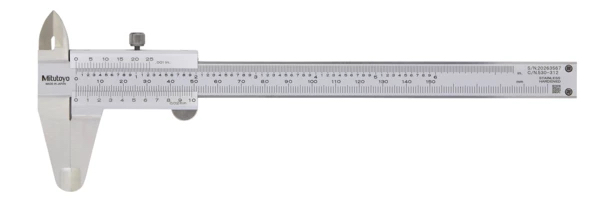
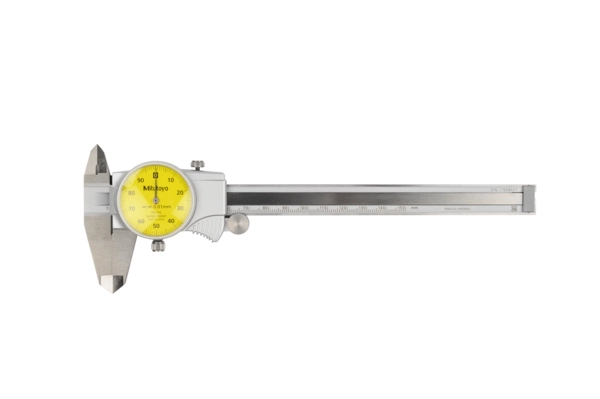
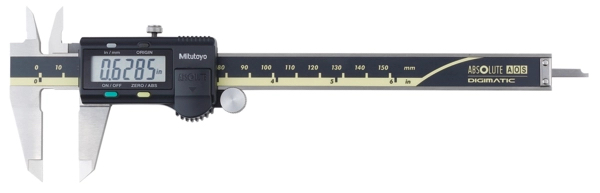
A depth gauge, again Vernier, dial, or digital, and again 20, ideally 10 microns resolution.
These satisfy Abbe's principle and therefore offer greater precision than calipers in the hands of a novice.
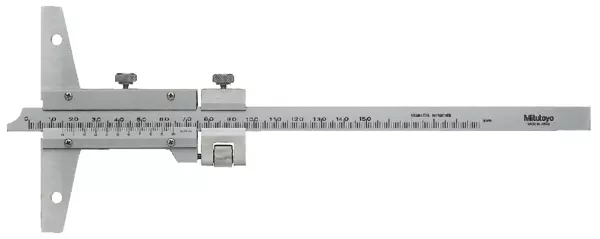
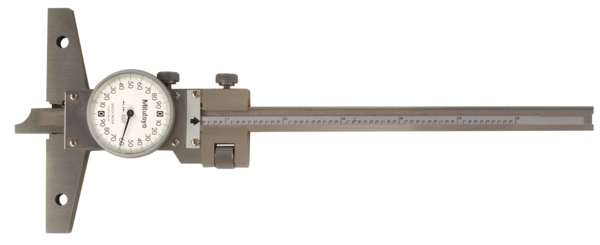
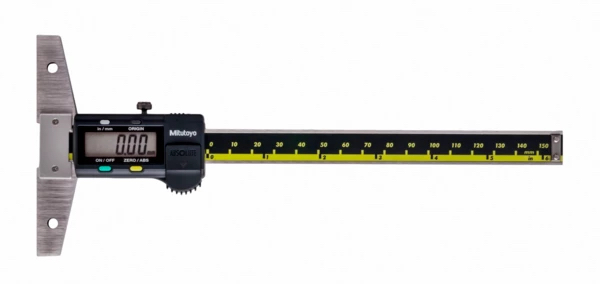
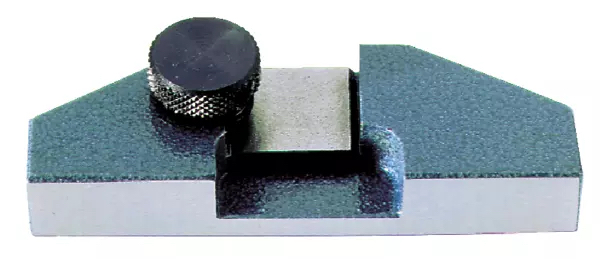
Alternatively you can get a depth gauge attachment for calipers.
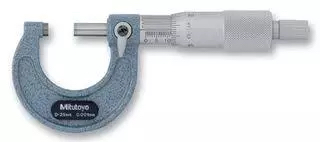
An outside micrometer (0-50mm if you can get it, usually comes as a 0-25mm, 25mm-50mm combo).
These usually come in 10 micron or 1 micron resolution but a trained operator can read a 10 micron resolution to about 2 micron accuracy.
They should ideally be used in a clamp; if you hold the frame too long during the measurement it warms up, expands and accuracy is lost.
Satisfies Abbes principle so again usually high precison.
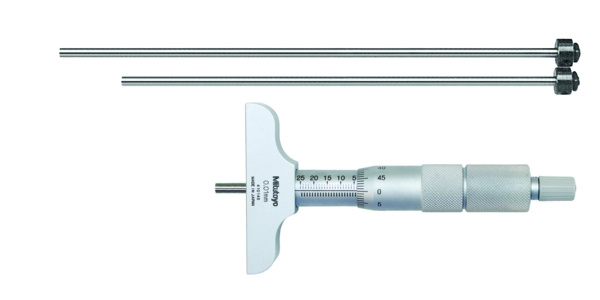
A depth micrometer sounds nice, but the ones that come with screw-in replaceable rods to extend the range beyond 25mm are useless without a reference datum and gauge blocks or height master for calibration (which are very expensive; the price of the depth micrometer itself pales in comparison).
_________________
Mark
SONY A7S, A7RII + dust-sealed modded Novoflex/Fotodiox/Rayqual MD-NEX adapters
Minolta SR-1, SRT-101/303, XD7/XD11, XGM, X700
Bronica SQAi
Ricoh GX100
Minolta majority of all Rokkor SR/AR/MC/MD models made
Sigma 14mm/3.5 for SR mount
Tamron SP 60B 300mm/2.8 (Adaptall)
Samyang T-S 24mm/3.5 (Nikon mount, DIY converted to SR mount)
Schneider-Kreuznach PC-Super-Angulon 28mm/2.8 (SR mount)
Bronica PS 35/40/50/65/80/110/135/150/180/200/250mm |
|
| Haut de page |
|
|
visualopsins
Inscrit le: 05 Mar 2009
Messages: 11697
Localisation: California
Expire: 2027-07-11
|
Posté: Lun Août 26, 2024 8:03 pm Sujet du message: |
|
Posté: Lun Août 26, 2024 8:03 pm Sujet du message: |
|
|
visualopsins wrote:
| RokkorDoctor a écrit: |
| visualopsins a écrit: |
The effect of differences depends greatly on focal length -- wider lens mounts need tighter tolerances because the distances moved by focus ring are smaller than distances moved for longer focal lengths.
Most if not all lenses are infinity calibrated with some focus travel leftover, to accommodate expansion and contraction changes due to temperature -- banging the focus stop to infinity is not accurate. Somewhat like a broken clock. |
Hmm...; not sure I agree with that vis; the register accuracy is all about depth-of-focus, which is directly linked to the aperture. Two lenses of quite different focal length (e.g. 200mm vs 20mm) but of same aperture (e.g. f/2.8 ) will show the same degree of image softening if the register/adapter is slightly off by the same amount (e.g. 20 microns). Once you get closer to 1:1 image magnification situation things start to behave a bit different. The actual error in focus distance as measured in the subject space/field is of course different for lenses of different focal lengths.... |
Of course you are specifically correct -- dof depends entirely on magnification and aperture. Generally speaking wide angle lenses magnify less. A long 1:1 telephoto, of course, is an exception to the general rule.
_________________
☮☮☮☮☮☮☮☮☮☮☮☮☮☮☮☮☮☮☮☮☮☮☮☮☮☮☮☮☮☮☮☮ like attracts like! ☮☮☮☮☮☮☮☮☮☮☮☮☮☮☮☮☮☮☮☮☮☮☮☮☮☮☮☮☮☮☮☮
Cameras: Sony ILCE-7RM2, Spotmatics II, F, and ESII, Nikon P4
Lenses:
M42 Asahi Optical Co., Takumar 1:4 f=35mm, 1:2 f=58mm (Sonnar), 1:2.4 f=58mm (Heliar), 1:2.2 f=55mm (Gaussian), 1:2.8 f=105mm (Model I), 1:2.8/105 (Model II), 1:5.6/200, Tele-Takumar 1:5.6/200, 1:6.3/300, Macro-Takumar 1:4/50, Auto-Takumar 1:2.3 f=35, 1:1.8 f=55mm, 1:2.2 f=55mm, Super-TAKUMAR 1:3.5/28 (fat), 1:2/35 (Fat), 1:1.4/50 (8-element), Super-Multi-Coated Fisheye-TAKUMAR 1:4/17, Super-Multi-Coated TAKUMAR 1:4.5/20, 1:3.5/24, 1:3.5/28, 1:2/35, 1:3.5/35, 1:1.8/85, 1:1.9/85 1:2.8/105, 1:3.5/135, 1:2.5/135 (II), 1:4/150, 1:4/200, 1:4/300, 1:4.5/500, Super-Multi-Coated Macro-TAKUMAR 1:4/50, 1:4/100, Super-Multi-Coated Bellows-TAKUMAR 1:4/100, SMC TAKUMAR 1:1.4/50, 1:1.8/55
M42 Carl Zeiss Jena Flektogon 2.4/35
Contax Carl Zeiss Vario-Sonnar T* 28-70mm F3.5-4.5
Pentax K-mount SMC PENTAX-A ZOOM 1:3.5 35~105mm, SMC PENTAX ZOOM 1:4 45~125mm
Nikon Micro-NIKKOR-P-C Auto 1:3.5 f=55mm, NIKKOR-P Auto 105mm f/2.5 Pre-AI (Sonnar), Micro-NIKKOR 105mm 1:4 AI, NIKKOR AI-S 35-135mm f/3,5-4,5
Solinon 1:5.6/18 ASPH.
Tamron SP 17mm f/3.5 (51B), Tamron SP 17mm f/3.5 (151B), SP 500mm f/8 (55BB), SP 70-210mm f/3.5 (19AH)
Vivitar 100mm 1:2.8 MC 1:1 Macro Telephoto (Kiron)
|
|
| Haut de page |
|
|
Doc Sharptail

Inscrit le: 23 Nov 2020
Messages: 1504
Localisation: Winnipeg Canada
|
Posté: Mar Août 27, 2024 5:20 am Sujet du message: |
|
Posté: Mar Août 27, 2024 5:20 am Sujet du message: |
|
|
Doc Sharptail wrote:
And from the adapter-less crowd:
There are "vintage" (and slightly newer) lenses that are simply incapable of reaching infinity- which even shows on a 12MP sensor. I blame sample variation for the limited experiences I've had with it.
Just something to think about.
-D.S.
_________________
D-810, F2, FTN, FT-3 in Black
35mm f2 O.C. nikkor
50 f2 H nikkor, 50 f2 H.C. nikkor, 50 f 1.4 AI-s, 135 f3.5 Q,
50 f2 K nikkor 2x, 28-85mm f3.5-4.5 A/I-s, 35-105 3.5-4.5 A/I-s, 200mm f4 Micro A/I, partial list.
"Ain't no half-way" -S.R.V.
"Oh Yeah... Alright" -Paul Simon |
|
| Haut de page |
|
|
lumens pixel
Inscrit le: 27 Fév 2019
Messages: 1128
Expire: 2021-06-25
|
Posté: Mer Déc 31, 2025 9:23 am Sujet du message: |
|
Posté: Mer Déc 31, 2025 9:23 am Sujet du message: |
|
|
lumens pixel wrote:
This post should not belong to the adapters section but I am pursuing my investigations and discovered a crooked E-Mount.
I did notice, after having shimmed my Minolta adapter, that I often had to add some tape on the left side of the lens. I realised the same on some Nikon lenses with a measured adapter that could not be the culprit.
I remembered that I had to correct also some FD lenses.
I have no method to measure a crooked mount but after checking again the screws of the mount of my Sony A7II I considered that such a widespread correction should be linked to the mount.
Hence an in adapter correction, adding some microns to the left side of the adapter being now dissymmetric for the sake of levelling the mount.
I have done that on my Canon FD adapter and it worked, I was able to reduce some layers of tape on some lenses and to add (less) tape on the opposite side for others I thought were straight but indeed were crooked. I considered for this move that the majority of the lenses benefiting of a tilt should tell the truth about the mount itself. All in all we are discussing 40 microns here and there.
Conclusion: my E Mount was crooked and if I have to change camera one day I will check the mount based on the "majority rule".
Merry Christmas and Happy New Year to all.
_________________
Lumens Pixel
-------------
Minolta SR mount: 16 2,8; Sigma SuperWide 24 2,8; 28 2,5; 28 2,8; 28 3,5; 35 2,8; 45 2,0; 50 1,4; 50 1,7; 50 2,0; 58 1,4; 85 2,0; 100 2,5; 100 4 Macro; 135 3,5; 135 2,8; 200 4; RF 250 5,6; 24-35 3,5; 35-70 3,5; 75-150 4; 70-210 4
Canon FD mount: Tokina RMC 17 3,5; 28 2,8; 35 2,8; 50 1,8; 50 3,5 Macro; 55 1,2; 135 3,5; 135 2,5; 200 4,0; 300 5,6; 28-55 3,5 4,5; Tokina SZ-X SD 270; 70-150 4,5; 70-210 f4; 80-200 4L; Tokina SZ-X 845
Tamron Adaptall: 28-80 3,5-4,2 (27A); 70-210 3,8-4 (46A); 60-300 (23A); 90 2,5 (52B); 35-135 3,5-4,5 (40A)
Tamron SP: 20-40 2,7-3,5 (266D)
Dernière modification par lumens pixel le Mer Déc 31, 2025 2:11 pm ; modifié 1 fois au total |
|
| Haut de page |
|
|
stevemark
Inscrit le: 29 Avr 2011
Messages: 5509
Localisation: Switzerland
|
Posté: Mer Déc 31, 2025 1:47 pm Sujet du message: |
|
Posté: Mer Déc 31, 2025 1:47 pm Sujet du message: |
|
|
stevemark wrote:
Not necessaryly the mount - could also be e. g. the sensor itself. I very much remember the first batches of the first "real" Minolta DSLR, the Dynax 7D: Its sensor was condiderably tilted, resulting in completely blurred Image edges If using f 1.4 ... f 2.8 and reasonable border resolution only at f 8 ...
Turned out later that a thin layer of glue between sensor and supporting strucure had been irregular...
S
_________________
www.artaphot.ch |
|
| Haut de page |
|
|
|
|
 Français
 Español
 中文
 Magyar
 Русский
 Deutsch
 日本語


